2026 How to Protect Your Spine From Sitting 8 Hours

Time:2026-09-20 Author:Mason
0%

Eight hours in a chair can quietly reshape how your body moves. Your hips stay bent, your shoulders drift forward, and your lower back loses its natural support. By late afternoon, stiffness may feel normal. It is not always harmless.

So, why is sitting for 8 hours bad for your spine? Prolonged sitting increases pressure on spinal discs and weakens the muscles that stabilize your pelvis and trunk. It can also reduce movement in your hips and upper back. Research and clinical guidance consistently support regular movement, ergonomic adjustments, and strengthening exercises for reducing discomfort. Still, no single chair or posture solves everything.

Small changes matter.

In 2026, many people work beside a laptop, a second monitor, and a phone that rarely leaves reach. A typical day may include meetings, commuting, meals, and screen time without a meaningful standing break. Your body notices those missing transitions. Stand for two minutes. Walk while making a call. Adjust your screen until your eyes meet its upper third, and keep both feet supported.

These recommendations are practical, but they are not perfect. I once believed “good posture” meant holding my back rigidly all day. That effort only created more tension. A healthier approach allows frequent position changes, controlled movement, and realistic habits. Persistent pain, numbness, weakness, or pain traveling into an arm or leg deserves evaluation by a qualified healthcare professional. This guide explains how to protect your spine without chasing an impossible posture.
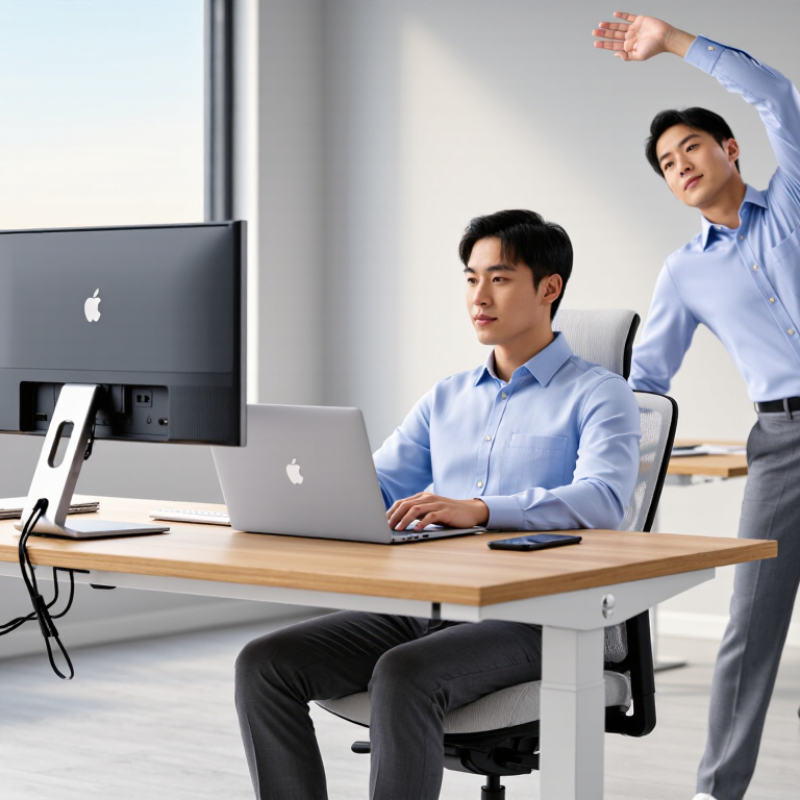
2026 How to Protect Your Spine From Sitting 8 Hours

Why Eight Hours of Sitting Can Strain the Spine

Eight hours of sitting can strain the spine through repeated, low-level loading. It is rarely one damaging event. A classic study by Nachemson and Morris found lumbar disc pressure reached about 140% of standing pressure while sitting. Leaning forward increased it further, to roughly 185%. However, that small laboratory study had limitations and cannot represent every office worker. The World Health Organization’s 2020 guidelines recommend reducing sedentary time, but they do not define eight hours as a universal danger threshold.

Posture matters, but movement matters more. Keep both feet supported, place the screen near eye level, and avoid collapsing into the chair. Move before pain. Stand for two minutes every 30 to 60 minutes, walk during calls, or perform gentle hip and thoracic stretches. Evidence on exact break schedules remains mixed, so treat them as practical experiments, not medical rules. I have found that a timer helps, although timers are easy to ignore during deadlines.

The global burden is substantial. A 2023 Lancet Rheumatology analysis estimated that 619 million people experienced low back pain in 2020, with projections reaching 843 million by 2050. This figure does not prove that sitting alone causes pain. Sleep, fitness, stress, previous injuries, and workload also influence spinal symptoms. Persistent pain, leg weakness, numbness, or changes in bladder control require prompt assessment by a qualified healthcare professional.

How to Set Up a Spine-Friendly Workstation

How to Protect Your Spine From Sitting 8 Hours

How to Set Up a Spine-Friendly Workstation

A spine-friendly workstation keeps your body supported, not frozen in one position. Place both feet flat on the floor, with your knees near hip height. Adjust the chair so your lower back feels supported without pressure. Your elbows should rest close to your body and bend around 90 degrees. Keep the keyboard near the desk edge, leaving space for relaxed wrists. Position the monitor directly in front of you, with its top near eye level. Your eyes should look slightly downward, not toward your lap.

Tips: Check your posture when the phone rings. Move the screen instead of twisting your neck. Use a small footrest if your feet cannot reach the floor. Stand or walk for two minutes every 30 to 45 minutes. These brief changes reduce prolonged loading, although they cannot replace regular movement and strength training.

I used to raise my chair too high, believing a taller position looked more professional. My shoulders tightened by lunchtime. Lowering the seat helped, but the setup was not perfect. Desk height, body proportions, and previous injuries all matter. A physiotherapist or qualified ergonomist can assess persistent discomfort and suggest safer adjustments. Stop forcing a position that causes sharp pain, numbness, or weakness. Record how your back feels after different setups. Small notes can reveal patterns that memory misses.

Movement Strategies for Breaking Up Long Sitting Periods

Sitting for eight hours does not have to mean staying still for eight hours. The World Health Organization’s 2020 physical activity guidelines advise adults to reduce sedentary time and complete 150–300 minutes of moderate activity weekly. Short movement breaks can support that goal.

Try a five-minute walk every 30 minutes. A 2023 laboratory study reported that this pattern reduced post-meal glucose excursions by 58% compared with uninterrupted sitting. Walk to refill water, circle the room, or use stairs for one flight. Keep your shoulders relaxed and let your arms swing naturally. Set a quiet timer if meetings make time disappear.

During longer tasks, add simple spine-friendly movements. Stand beside your chair, extend your hips, and gently rotate your upper back. Perform five controlled repetitions, not forced stretches. Change positions before discomfort becomes sharp. A practical workstation rhythm might include 25 minutes of focused work, two minutes standing, and three minutes walking. It is not perfect. Some days, deadlines win. On those days, even one hallway lap is better than waiting for pain to demand attention.

Evidence supports frequent light movement, but it does not replace medical advice. Seek professional assessment for persistent pain, numbness, weakness, or symptoms traveling down an arm or leg.

2026: How to Protect Your Spine From Sitting 8 Hours

Movement strategies for breaking up long sitting periods

This practical example breaks each work hour into approximately 45 minutes of sitting and 15 minutes of light movement, such as walking, standing, gentle mobility, or changing posture. The schedule is intended to reduce uninterrupted sitting; it is not a medical prescription. The World Health Organization recommends limiting sedentary time and replacing it with physical activity whenever possible.

Reference: World Health Organization, Guidelines on Physical Activity and Sedentary Behaviour, 2020.

Simple Exercises to Support Spinal Strength and Mobility

Sitting for eight hours can leave the spine stiff, especially when the pelvis slides forward and the head drifts toward the screen. The World Health Organization’s 2020 guidelines recommend 150–300 minutes of moderate activity weekly, plus muscle-strengthening work on at least two days. Short movement breaks still matter. They are not a complete solution.

Try a two-minute reset every hour. Stand tall, gently tuck your chin, and hold for five breaths. Place your hands behind your head, lift your chest over the chair back, and breathe slowly. Then stretch each hip flexor for 20 seconds. These movements target neck alignment, thoracic mobility, and hip stiffness. Keep the motion comfortable. Never force a painful range.

Build spinal support with eight slow glute bridges and six bird-dog repetitions per side. Move as if balancing a glass of water on your lower back. The 2024 WHO Global Status Report on Physical Activity estimates that 31% of adults worldwide do not meet recommended activity levels. That figure makes daily strength practice relevant, but exercise quality matters more than rushing through repetitions. I still forget movement breaks during focused work. A timer helps, although it feels irritating. Stop if pain, numbness, or weakness appears, and seek assessment from a qualified health professional.

When Persistent Back Symptoms Require Medical Care

Eight hours of sitting can irritate your spine, but persistent symptoms deserve more than a posture adjustment. The World Health Organization reported that low back pain affected 619 million people globally in 2020. It also projects 843 million cases by 2050. These figures show how common the problem is, not how serious your individual pain may be. Pain lasting beyond 12 weeks is generally considered chronic, according to clinical guidelines. Do not simply “push through” it.

Arrange medical care when pain continues, repeatedly returns, or limits walking, sleep, work, or daily movement. Seek urgent assessment for new leg weakness, numbness around the groin, loss of bladder or bowel control, fever, major trauma, unexplained weight loss, or a history of cancer. These warning signs can indicate conditions requiring prompt evaluation. The CDC reported that about 39% of U.S. adults experienced back pain during the previous three months in 2022. Still, population data cannot explain your symptoms. That requires an examination.

A clinician may review your sitting habits, strength, reflexes, medications, and movement pattern. Imaging is not automatically needed; many guidelines recommend it only when serious disease is suspected or results would change treatment. A practical mistake is waiting for unbearable pain. Earlier advice may support safer activity, targeted rehabilitation, and work adjustments. I have noticed that “good posture” is often treated as a cure. It is not. Change positions, stand briefly, and record what worsens symptoms. Bring that record to your appointment. WHO, Low Back Pain Fact Sheet, 2023; CDC/NCHS, 2022 National Health Interview Survey.

2026 How to Protect Your Spine From Sitting 8 Hours - When Persistent Back Symptoms Require Medical Care

Area Practical target How to protect the spine during an 8-hour day When to seek medical care
Workstation posture Keep the head balanced over the shoulders and the lower back supported. Adjust the chair so the feet are supported, shoulders are relaxed, elbows are near the body, and the screen is positioned to reduce repeated neck bending. Arrange an assessment if poor posture is accompanied by continuing pain, weakness, or reduced function.
Movement breaks Avoid remaining in one position for long, uninterrupted periods. Stand, walk briefly, change position, or perform gentle mobility movements regularly throughout the workday. Short, frequent breaks are easier to maintain than one long break. Get medical advice if movement consistently worsens symptoms or daily activities become difficult.
Daily physical activity Build toward at least 150 minutes of moderate-intensity activity per week, when medically appropriate. Use walking, swimming, cycling, or another tolerable activity. Increase duration gradually rather than suddenly. Consult a clinician before increasing activity if pain is severe, follows an injury, or is associated with neurological symptoms.
Strength and flexibility Train the muscles that support the trunk, hips, and legs, with controlled technique. Use a gradual program that may include core, hip, and leg strengthening plus gentle mobility. Stop an exercise that causes sharp or radiating pain. Seek professional guidance when exercises repeatedly trigger leg pain, numbness, weakness, or loss of coordination.
Lifting and carrying Reduce avoidable load and keep objects close to the body. Plan the lift, bend through the hips and knees, avoid twisting while lifting, and ask for help with heavy or awkward objects. Promptly obtain care after a lift-related injury with severe pain, weakness, numbness, or difficulty walking.
Managing a new episode Remain gently active as tolerated instead of prolonged bed rest. Temporarily modify painful tasks, use comfortable positions, and return gradually to normal activities. Medication should be used only according to professional advice and label directions. Arrange an evaluation if symptoms are severe, recurrent, progressively worsening, or not improving with self-care.
Persistent symptoms Do not ignore symptoms that continue or interfere with work, sleep, walking, or routine activities. Record when symptoms began, what aggravates or relieves them, their location, and any numbness or weakness. Share this information with a healthcare professional. Book a medical assessment when back pain persists for several weeks, keeps returning, or is accompanied by leg symptoms or functional limitations.
Emergency warning signs Treat new neurological or systemic warning signs as urgent. Do not attempt to manage serious warning signs solely with workplace adjustments or home exercises. Seek urgent medical care for new loss of bladder or bowel control, numbness around the groin or inner thighs, rapidly worsening leg weakness, inability to walk, major trauma, fever with severe back pain, or unexplained weight loss with persistent pain.

General information only. Individual recommendations may differ according to age, health conditions, injury history, pregnancy, medications, and examination findings.

FAQS

How should I position my feet and knees at a desk?

Keep both feet flat on the floor. Your knees should sit near hip height. Use a small footrest if needed.

Where should my monitor and keyboard sit?

Place the monitor directly in front of you. Keep its top near eye level. Position the keyboard near the desk edge.

What elbow and wrist position supports comfortable typing?

Keep your elbows close to your body. Bend them near 90 degrees. Leave room for relaxed wrists.

How often should I move during a long workday?

Stand or walk for two minutes every 30 to 45 minutes. A quiet timer can help when meetings blur your schedule.

What can I do during a five-minute movement break?

Walk to refill water, circle the room, or climb one flight of stairs. Keep your shoulders relaxed and let your arms swing.

Can short movement breaks replace exercise?

No. They reduce prolonged sitting but do not replace regular movement or strength training. Aim for 150 to 300 minutes of moderate activity weekly.

What simple movements can I perform beside my chair?

Extend your hips gently and rotate your upper back. Perform five controlled repetitions. Do not force a stretch.

What should I do if my workstation still causes discomfort?

Record how your back feels after different adjustments. Desk height and body proportions matter. My setup may still need review.

When should I seek professional assessment?

Seek help for persistent pain, numbness, weakness, or symptoms traveling down an arm or leg. Stop forcing any position that causes sharp pain.

Conclusion

Sitting for eight hours can place continuous pressure on the spinal discs, weaken postural muscles, and encourage rounded shoulders, a forward head, and reduced hip mobility. The question “why is sitting for 8 hours bad for your spine” is largely answered by the lack of movement: staying in one position limits circulation and makes the spine absorb stress unevenly. A spine-friendly workstation should keep the screen near eye level, support the lower back, allow both feet to rest firmly on the floor, and position the keyboard so the shoulders remain relaxed.

Regular movement is equally important. Stand, walk, or gently change position every 30 to 60 minutes instead of waiting for discomfort to appear. Brief exercises such as pelvic tilts, gentle spinal rotations, chest-opening stretches, hip-flexor stretches, and controlled core strengthening can improve mobility and support spinal stability. However, persistent pain, numbness, weakness, pain traveling into the legs, or symptoms that worsen should not be ignored. Seek medical advice for proper evaluation and personalized guidance.

Mason

Mason

Mason is a seasoned marketing professional with a deep expertise in the company's offerings and a passion for driving brand awareness. With a strong background in digital marketing strategies, he has an innate ability to connect with diverse audiences and effectively communicate product benefits.......