How to Know What Certifications Medical Grade Chairs Need?

Time:2026-10-20 Author:Aria
0%

Choosing a medical chair involves more than checking a product label or trusting the phrase “medical grade.” Buyers must examine intended use, construction, electrical features, cleaning requirements, and documented testing. The real question is: what certifications are required for medical grade chairs?

Scott Gottlieb, former Commissioner of the U.S. Food and Drug Administration, said, “Patients should have confidence that the medical products they use are safe and effective.” His statement offers a useful benchmark. A chair used for examination, treatment, patient transfer, or clinical support may face different requirements from a chair used in a waiting room. The difference matters.

Powered models may require electrical safety testing, such as applicable UL or IEC standards. Upholstery may need resistance to disinfectants, moisture, ignition, and repeated cleaning. Some products may also require load testing, stability testing, antimicrobial claims review, or accessibility considerations. FDA classification can depend on the chair’s claims and intended medical function, not its appearance.

Labels can mislead.

Certification is not always mandatory. Some standards are voluntary, while healthcare facilities may still require them through purchasing policies, risk assessments, or accreditation procedures. I have seen product descriptions make broad safety claims without naming a test laboratory, standard number, or certificate scope. That should encourage careful questions, not immediate rejection.

This guide explains how to identify relevant certifications, separate marketing language from evidence, and request reliable documentation from manufacturers. Requirements can vary by country and chair design. Therefore, readers should verify current rules with qualified compliance professionals and the relevant authorities before purchasing.
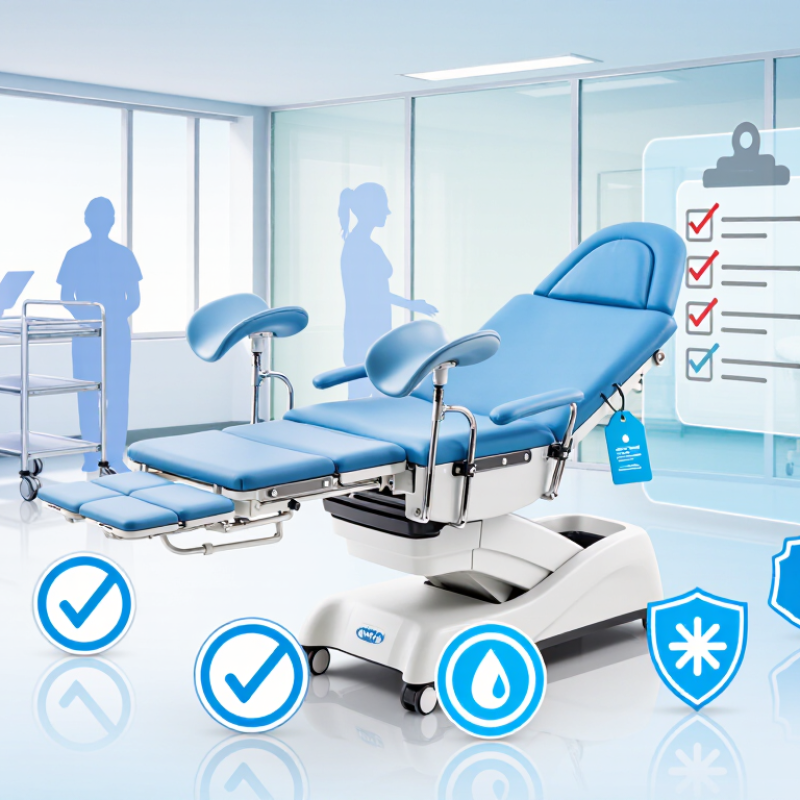
How to Know What Certifications Medical Grade Chairs Need?

Define the Chair’s Medical Use and Risk Class Before Checking Certifications

Before checking certifications, define exactly how the chair will be used. A chair for examination differs from one used during minor procedures. It may support a patient for ten minutes, or remain occupied for several hours.

Write the intended use in practical terms. Note the patient’s weight, transfer method, adjustment frequency, cleaning chemicals, and contact duration. Record whether staff will recline the chair beside electrical equipment. These details influence the relevant safety evidence. A powered chair may require electrical safety testing, while a manually adjusted chair may need stronger mechanical verification. Surfaces can also matter when frequent disinfection is expected.

Risk class comes next. Classification depends on the chair’s function, patient contact, foreseeable misuse, and market jurisdiction. Do not assume that every “medical” chair belongs to one universal category. That assumption can be wrong. In my experience, teams often request certificates before writing a clear use statement. This creates expensive confusion later.

Ask the supplier for test reports, declarations, material information, load ratings, and cleaning guidance. Check whether documents match the exact model and configuration. A report for a basic chair may not cover powered leg supports or added accessories. Review the evidence with a qualified regulatory or clinical safety professional. Requirements can change by country, and a familiar certificate may not prove complete compliance. Practical review beats a crowded document folder.

How to Know What Certifications Medical Grade Chairs Need?

Define the chair’s medical use and risk class before checking certifications. The chart shows common standards that may enter the evaluation process for different chair designs.

A value of 1 means the standard is commonly relevant for that chair type; 0 means it is generally not triggered by the listed feature alone. ISO 14971 addresses medical-device risk management, IEC 60601-1 addresses basic safety and essential performance of medical electrical equipment, ISO 10993-1 addresses biological evaluation when materials contact the body, and IEC 62366-1 addresses usability engineering. Final requirements depend on intended use, construction, patient contact, power features, risk classification, and the target market.

Separate Safety, EMC, Biocompatibility, and Quality-System Requirements

Medical grade chairs need more than a polished product label. Requirements depend on their intended use, electrical design, patient contact, and target market. A chair used beside monitoring equipment may need electrical safety evaluation under applicable medical-device standards. Reviewers usually examine stability, load capacity, grounding, leakage current, moving parts, and fire-related risks. A chair that lifts or reclines should also protect users from crushing and pinching points.

EMC requirements deserve separate attention. The chair should limit electromagnetic emissions and continue operating safely near monitors, pumps, or wireless equipment. Testing often considers both normal operation and disturbances, such as electrostatic discharge. A quiet examination room can expose small control errors. It happens. Biocompatibility is equally specific. Upholstery, cushions, handles, and adhesives may touch intact skin or damaged tissue. Material assessment should follow the contact type and duration, often using a risk-based biological evaluation. “Medical grade” alone proves little.

Quality-system evidence supports the product’s consistency, not just one successful test. A manufacturer may need a documented system covering design controls, supplier checks, production records, complaint handling, and corrective actions. ISO 13485 certification can strengthen this evidence, but it does not replace product safety or EMC testing. During a practical review, I would request test reports, declared use, material information, and traceable revisions. A tidy certificate file can still hide gaps. That is why intended use should be confirmed before accepting any certification claim.

Check IEC 60601-1 and IEC 60601-1-2 for Powered Medical Chairs

How to Know What Certifications Medical Grade Chairs Need?

Powered medical chairs should be reviewed under IEC 60601-1 when they support diagnosis, treatment, monitoring, or patient care. This standard examines basic safety and essential performance. It covers electrical insulation, protective grounding, leakage current, mechanical hazards, and abnormal operation. A chair may look simple, yet its motor, actuator, battery, and hand control create medical electrical risks.

IEC 60601-1-2 focuses on electromagnetic compatibility. The chair must operate safely near monitors, infusion equipment, wireless devices, and other clinical systems. Testing can include radiated emissions, immunity, electrostatic discharge, and voltage interruptions. In practice, cable routing and metal frame design can affect results. A small design change may require another review. This is easy to underestimate.

Tips: Confirm the chair’s intended use before choosing tests. Ask for current test reports, risk-management records, and production-control evidence. Check whether national deviations or additional particular standards apply in the target market. Use a qualified testing laboratory. Do not treat a supplier declaration as equal to independent verification. A practical inspection should also test emergency lowering, pinch points, cleaning exposure, and repeated adjustment cycles. Some teams focus heavily on electrical compliance and overlook user handling. That gap deserves honest review.

Verify FDA 21 CFR 820, EU MDR 2017/745, or UK MDR 2002

“Medical grade” is not a universal certification. Classification depends on the chair’s intended use, design, and marketing claims.

In the United States, verify the manufacturer’s quality records under FDA 21 CFR Part 820. Since February 2, 2026, FDA’s Quality Management System Regulation aligns Part 820 with ISO 13485:2016. Registration alone does not prove product approval. Ask for device listing details, risk controls, complaint procedures, and applicable test reports. ISO’s 2023 Survey recorded more than 38,000 ISO 13485 certificates worldwide. That figure shows quality-system adoption, not automatic compliance.

For the European Union, request evidence supporting EU MDR 2017/745 compliance. Review the device classification, technical documentation, clinical evaluation, post-market surveillance plan, and Declaration of Conformity. Higher-risk chairs may require notified-body involvement and CE marking. In the United Kingdom, check compliance under UK MDR 2002, the responsible person’s details, MHRA registration, and the correct UKCA or accepted CE route. Requirements can change.

Tips: Match every certificate to the exact model, intended use, and legal manufacturer. Check issue dates and certification scope. A supplier’s ISO certificate is useful, but it is not a product certificate. Ask for traceable reports from competent laboratories. I would also inspect cleaning instructions, load testing, electrical safety evidence, and replacement-part controls. One gap can matter.

Confirm ISO 13485 and ISO 14971 Evidence, Testing, and Traceability

How to Know What Certifications Medical Grade Chairs Need?

A medical-grade chair should be supported by a controlled quality system, not a polished brochure. ISO 13485 evidence shows how the manufacturer manages design, production, complaints, and corrective actions. Ask for a current certificate, issuing body, scope, and site address. The scope should cover the chair and relevant manufacturing activities. A certificate alone is not enough. Check its validity and certification body accreditation where applicable. Requirements can vary by market, so local regulations still need review.

ISO 14971 evidence should explain how risks were identified, evaluated, controlled, and monitored. Request a risk-management summary linked to the chair’s intended use. It should address tipping, entrapment, electrical hazards, cleaning chemicals, patient transfer, and foreseeable misuse.

Testing should match those risks. Look for dated reports, sample identification, methods, acceptance criteria, and clear results. Testing may include load, stability, durability, electrical safety, flammability, and cleaning resistance. Impressive tables can still hide weak links to production units.

Tips: Traceability should work backwards and forwards. Can the supplier connect a serial number to materials, software revisions, inspection records, and released drawings? Can it identify affected units after a defect? Review change-control records and calibration status. Ask how nonconforming chairs are isolated. Keep objective evidence, not promises. Perfect documentation is uncommon. Unexplained gaps should not become normal.

FAQS

Why is “medical grade” alone insufficient for a chair?

“Medical grade” is not a universal certification. Compliance depends on intended use, design, patient contact, and target market. A polished label proves little.

What electrical safety features should be reviewed?

Check stability, load capacity, grounding, leakage current, moving parts, and fire-related risks. Lifting or reclining parts need guards against crushing and pinching. Small gaps matter.

Why does electromagnetic compatibility matter?

The chair should limit electromagnetic emissions and operate safely near monitors, pumps, and wireless equipment. Testing may include electrostatic discharge. Quiet rooms reveal control errors.

How should materials be assessed for patient contact?

Review upholstery, cushions, handles, and adhesives. Assess contact with intact skin or damaged tissue. Duration matters. A risk-based biological evaluation is more useful than a vague material claim.

What quality-system evidence should a supplier provide?

Request design controls, supplier checks, production records, complaint handling, and corrective-action records. A quality certificate supports consistency. It does not replace product testing.

Does registration prove that the chair is approved?

No. Registration alone does not prove safety, approval, or suitability. Ask for device details, risk controls, and applicable test reports. I would avoid trusting a single database entry.

Which documents should be checked for different markets?

Check the applicable national medical-device rules and market pathway. Review classification, technical documents, clinical evidence, post-market monitoring, and conformity declarations. Requirements can change.

How can certification claims be verified?

Match every certificate to the exact model, intended use, and legal manufacturer. Check issue dates, scope, and traceable laboratory reports. One gap can matter.

What practical details deserve inspection before purchase?

Inspect cleaning instructions, load testing, electrical safety evidence, and replacement-part controls. Confirm revision numbers. I might still miss a hidden gap without careful traceability.

Conclusion

Determining what certifications are required for medical grade chairs begins with defining their intended medical use, powered functions, patient contact, and potential risks. A chair used for examination, treatment, rehabilitation, or patient transfer may face different expectations depending on its design and market. Manufacturers should separate requirements for electrical and mechanical safety, electromagnetic compatibility, biocompatibility of patient-contact materials, and quality management rather than treating certification as a single checklist.

For powered medical chairs, IEC 60601-1 and IEC 60601-1-2 may provide an important framework for safety and electromagnetic compatibility testing. Market access may also require evidence aligned with FDA 21 CFR 820, EU MDR 2017/745, or UK MDR 2002, depending on the destination. ISO 13485 can support documented quality processes, while ISO 14971 helps identify, evaluate, and control product risks. Reliable technical files should include test reports, design records, supplier information, labeling, post-market procedures, and traceability. The final certification path should be confirmed against the chair’s classification, features, and target market.

Aria

Aria

Aria is a dedicated marketing professional with a deep passion for innovative strategies and a keen understanding of our company's product offerings. With a wealth of experience in the industry, Aria excels at crafting engaging content that highlights the unique features and benefits of our......