What are the benefits of a saddle stool for doctors? The question matters during long examinations, charting sessions, and procedures that keep clinicians close to a patient. A saddle seat places the hips in a more open position than many conventional stools. For some doctors, that can make it easier to sit upright, reach forward, and move between patients without repeatedly shifting a bulky chair. The difference may feel practical: less fighting the seat, more room around the treatment table.
Ergonomist Dr. Alan Hedge is often associated with the reminder, “The best posture is the next posture.” That idea fits clinical work, where no single seated position stays comfortable all day. A saddle stool may encourage small, natural movements and allow quick height adjustments, but it is not a cure for back pain or a good fit for every body. Foot support, seat width, procedure height, and time spent sitting all matter. Try it before committing.
Picture a clinician leaning toward a patient, then turning to reach a tray. A stable base and suitable seat height may make those transitions feel smoother. Still, the learning curve can be real; some users initially feel pressure or instability. That deserves attention, not dismissal. This introduction explores how saddle stools may support posture, mobility, and comfort in medical settings, while weighing their limits and the details doctors should check before choosing one.
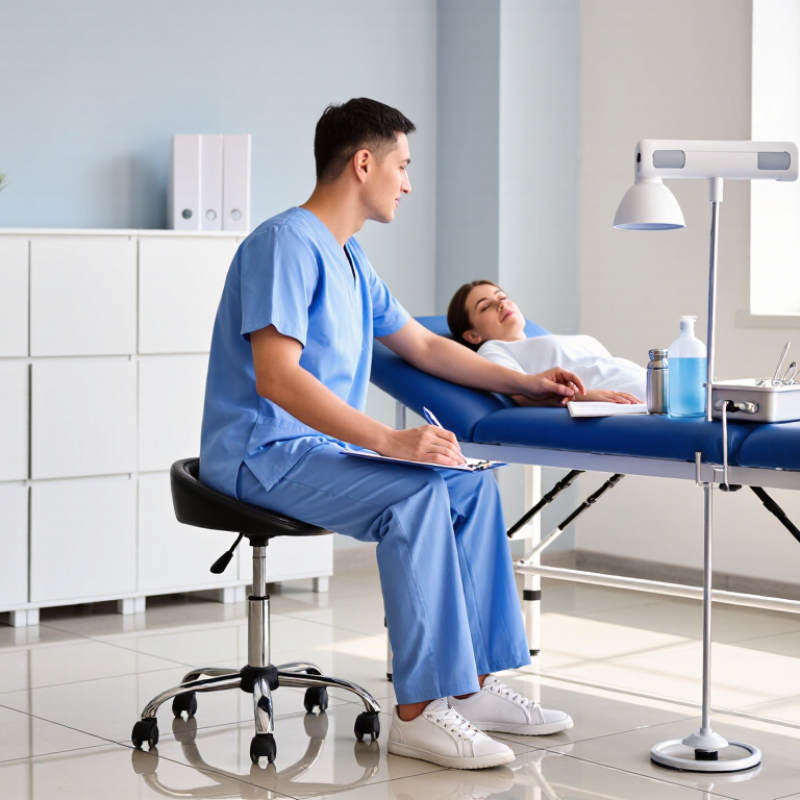
For doctors, a saddle stool can change the working posture more than a conventional flat seat. Its raised front and lower back support may encourage the pelvis to tilt forward naturally. This creates a more open hip angle, often reported near 135 degrees in ergonomic research. Mandal’s clinical seating studies linked this posture with reduced lumbar flexion and improved spinal alignment. The position can feel useful during examinations, procedures, and microscope work.
The 135° figure is not a prescription. It is a reference point. Body size, table height, and procedure type still matter. A 2020 review in Applied Ergonomics reported that saddle-style seating may reduce trunk inclination and improve seated stability, but results varied between users. NIOSH guidance also identifies prolonged static posture and awkward reaching as contributors to work-related musculoskeletal discomfort. A stool that allows easy movement may help the doctor shift weight, bring the patient closer, and keep both feet grounded.
In practice, small adjustments matter. The hips should sit slightly higher than the knees, while the feet remain supported on the floor. During a ten-minute examination, the clinician might notice less pressure behind the thighs and fewer forward bends. Still, some users report discomfort during the first week. That should not be ignored. The 135° angle is useful evidence, but individual comfort and clinical control remain equally important.
A saddle stool can support doctors during examinations, procedures, and charting. Its raised front may encourage an open hip angle and reduce forward slumping. However, posture depends on adjustment, task height, and movement. The stool is not magic.
OSHA’s Computer Workstations eTool recommends keeping elbows close to the body, bent between 90° and 120°. This range helps reduce shoulder elevation and excessive wrist extension. In a clinic, the practical test is simple: forearms should rest comfortably while hands reach instruments or a keyboard. The shoulders should remain relaxed. Feet should contact the floor or a stable foot ring.
NIOSH ergonomic guidance identifies prolonged static posture and awkward joint positions as contributors to musculoskeletal strain. A properly adjusted saddle stool may help by allowing easier pelvic movement during close work. It can also make clinicians feel more balanced when leaning toward a patient. Yet a poorly fitted stool may create pressure behind the knees or fatigue in the hips. That matters. Different body sizes need different seat heights, and some procedures require standing or repositioning. OSHA’s guidance supports neutral alignment, but it does not promise one perfect posture. Doctors should check elbow angles throughout the workday, especially when switching between examination tables, monitors, and instruments. A small adjustment may be more valuable than an expensive assumption.
What Are the Benefits of a Saddle Stool for Doctors?
Patient-Side Access: How Seat Height Supports Close Clinical Tasks
A saddle stool can improve patient-side access during detailed clinical work. Its raised, open posture helps doctors move closer without leaning heavily over the patient. This matters during examinations, minor procedures, and instrument handling. A stable seat may also reduce unnecessary twisting through the lower back and shoulders.
Seat height is especially important. When the stool sits high enough, the doctor’s knees can remain below the patient’s working surface. This creates clearer access to the treatment area and supports a more upright spine. The clinician can adjust position with small movements instead of repeatedly standing or reaching. Clinical ergonomics guidance generally recommends fitting the seat to the task, patient, and equipment.
Too much height creates problems. The feet may lose firm contact with the floor, and the doctor may slide forward. Too little height can force rounded shoulders and restricted arm movement. In practice, small adjustments often matter more than a fixed “ideal” setting. A doctor may need to change height between a seated examination and close instrument work.
Comfort is not proof of correct posture. It deserves checking. After several minutes, clinicians should notice pressure points, uneven weight, or tension around the neck. These details can reveal a poor setup before fatigue affects precision. The stool supports clinical work best when paired with thoughtful positioning, clear patient access, and regular ergonomic review.
What Are the Benefits of a Saddle Stool for Doctors?
Comfort and Fatigue: What Studies Measure in Saddle-Seat Use
Research on saddle-seat use often measures more than whether a clinician says a stool feels comfortable. Studies may track reported pain or discomfort, posture, muscle activity, and how long a person can work before fatigue appears. Some also compare saddle seats with conventional chairs during similar tasks. These measures help, but they do not tell the whole story. A short laboratory session is not the same as a busy clinic day.
A saddle seat places the hips in a more open position, which may make it easier for some doctors to sit upright and move between patients. Researchers can observe changes in trunk angle or ask participants to rate strain in areas such as the lower back, hips, and thighs. Small details matter: reaching toward a patient, turning to a monitor, or keeping both feet supported may change how the stool feels. Not every body responds alike.
Comfort ratings are personal. One clinician may feel less pressure after an hour, while another may notice thigh discomfort or miss back support. Fatigue also depends on task demands, stool adjustment, and time spent sitting. A careful study should report who took part, how long they used the seat, and what comparison was made. The evidence can guide a trial, not promise relief. That distinction is easy to overlook. A practical assessment includes fit, movement, and comfort across a full work shift.
A saddle stool can support a more upright posture during examinations, procedures, and charting. Its shaped seat may reduce forward sliding and keep the pelvis better aligned. However, comfort depends heavily on correct adjustment. Set the height so your feet rest firmly on the floor. Your knees should remain slightly below your hips. The exact position varies with each clinician.
Adjustability matters in a busy clinical setup. A smooth height range helps doctors move between a treatment chair, examination table, and computer station. A tilting seat can support forward leaning, but excessive tilt may increase pressure on the thighs. Small changes matter. Test each setting while wearing normal work shoes. A stool that feels comfortable for five minutes may feel different after an hour.
Stability is equally important. Choose a broad, strong base with quiet, controlled casters when movement is necessary. The stool should not roll unexpectedly during delicate work. At the same time, overly rigid wheels can make repositioning awkward. Check how the base behaves on your actual flooring, not only in a showroom. Seat width, edge shape, and cushioning should match your body and clothing. Very firm padding may improve control, yet some users need softer support. No stool fits everyone. Even experienced clinicians may need to reconsider their preferred height after changing rooms, equipment, or daily tasks.
How to interpret the chart: A saddle stool is most useful when it can be adjusted to support stable foot contact, an open hip angle, and neutral working posture. The values shown are evidence-informed ergonomic setup targets rather than measurements of a specific product.
Keep elbows bent between 90° and 120°. Keep them close to your body. Your shoulders should stay relaxed.
Rest your forearms comfortably while reaching for a keyboard or instrument. Keep your wrists fairly straight. Check again when you change tasks.
Set it so your feet rest firmly on the floor or a stable foot ring. Keep your knees slightly below your hips. Small changes matter.
Its raised front may support an open hip angle and help limit forward sliding. It is not magic. Your posture still depends on fit and movement.
Try it in your work shoes and at your actual stations. Check for pressure behind your knees or tired hips. Five minutes may not tell you enough.
Look for a broad, strong base and controlled movement. Test the casters on your clinic’s flooring. Unexpected rolling can disrupt a delicate task.
No. A slight tilt may support forward leaning, but too much can press on your thighs. I may need to rethink a setting that felt fine at first.
No. Some procedures call for standing or repositioning. Recheck your elbow angle when moving between a table, monitor, and instruments. A small adjustment can help.
What are the benefits of a saddle stool for doctors? A saddle-style seat can support a more balanced working posture by encouraging an open hip angle, often reported near 135 degrees, which may reduce excessive bending during clinical procedures. Its design can also help doctors maintain a comfortable elbow position within the commonly recommended 90°–120° range, supporting controlled hand movements and better upper-body alignment.
Because saddle stools are often easy to position close to the patient, they may improve access during detailed, patient-side tasks while allowing the doctor to adjust height for different working surfaces. Comfort and reduced fatigue depend on individual fit, sitting habits, and procedure length, so adjustability is essential. A suitable stool should provide stable support, smooth height adjustment, adequate leg clearance, and a shape that matches the clinical setup. Proper selection can contribute to efficient movement and sustained comfort throughout the workday.

Valet Chair